

LANGUAGE SUPPORT, CENTERED ON PEOPLE
English–Spanish medical & legal interpretingEvery word.
Every person.
Understood.
Human connection starts with clear communication. Our team brings professional language support to healthcare, legal services and the people who depend on them.
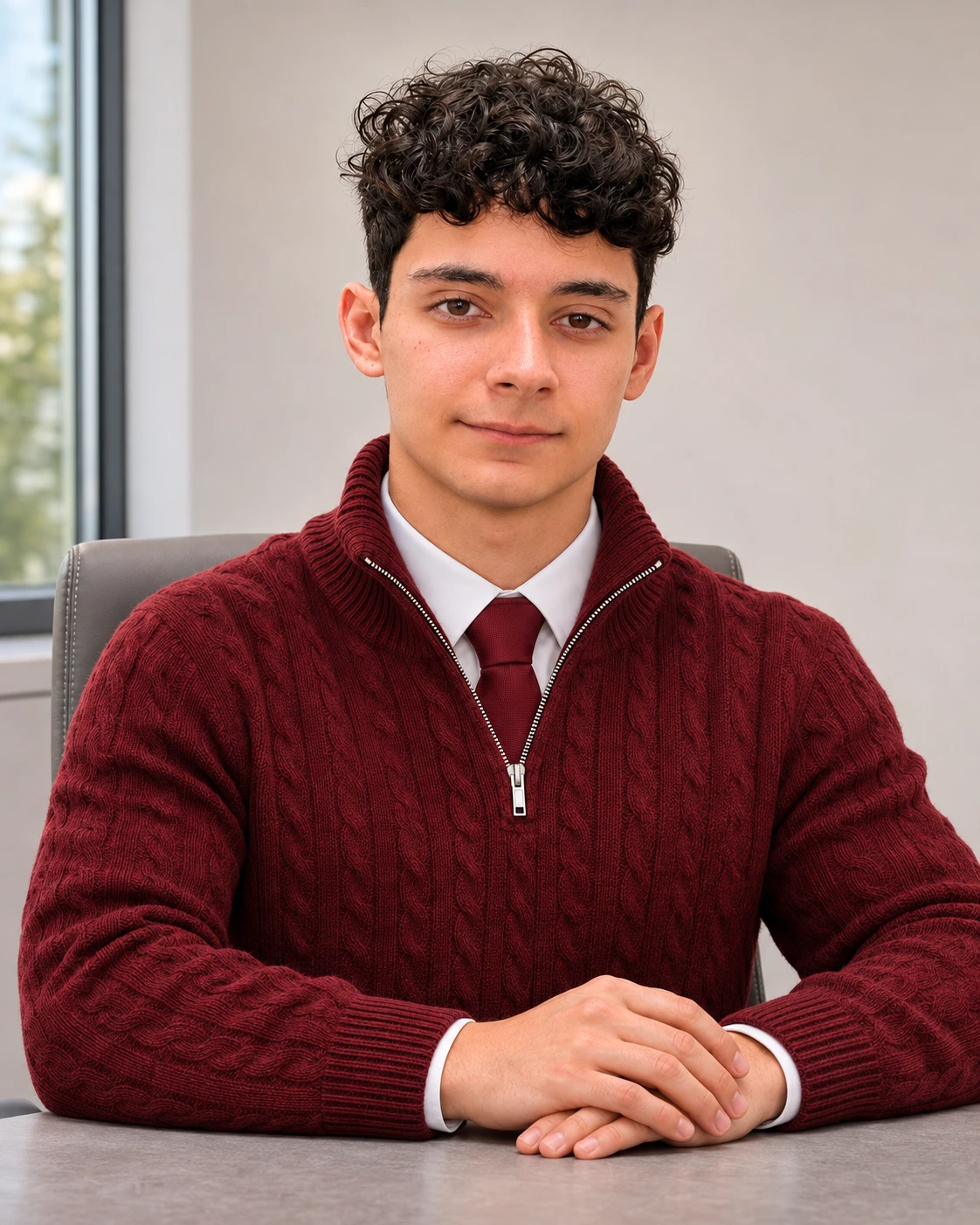
PEOPLE FIRST. LANGUAGE ALWAYS.United in understanding.Marco Dominguez & the ULP team
UNITED LANGUAGE PROFESSIONALS CORPMedical & healthcare✦Legal & professional✦In-person interpreting✦Telehealth language support
TRAINING & PROFESSIONAL EXPERIENCE
Bridging the GapMedical Interpreter Training
Professional training.
Experience across care.
Marco’s medical interpreter training and résumé-listed experience bring the professional background behind our team into focus. Explore the program and organizations below, with each name clearly identified by its role.

Kaiser Permanente
Named in Marco Dominguez’s résumé
Wellstar Urgent Care
Named in Marco Dominguez’s résumé
Emory Healthcare · Physical Therapy
Named in Marco Dominguez’s résumé
BenchMark Physical Therapy
Named in Marco Dominguez’s résumé
Piedmont Orthopedics
Named in Marco Dominguez’s résumé
Tanner Medical Center
Named in Marco Dominguez’s résumé
Resurgens Orthopaedics
Experience confirmed by Marco
Grady Memorial Hospital
Experience confirmed by Marco
Culture Element
Named in Marco Dominguez’s résumé
Translation Station, Inc.
Named in Marco Dominguez’s résumé
Horizon Language Services
Named in Marco Dominguez’s résuméRésumé-listed experience. Organization logos identify their owners; they do not imply endorsements or current ULP contracts.
12 logos · Training and résumé experience01 / OUR EXPERTISE
Clear communication.
Meaningful connections.
From a clinical visit to a client consultation, we help English- and Spanish-speaking people take part in the same conversation.
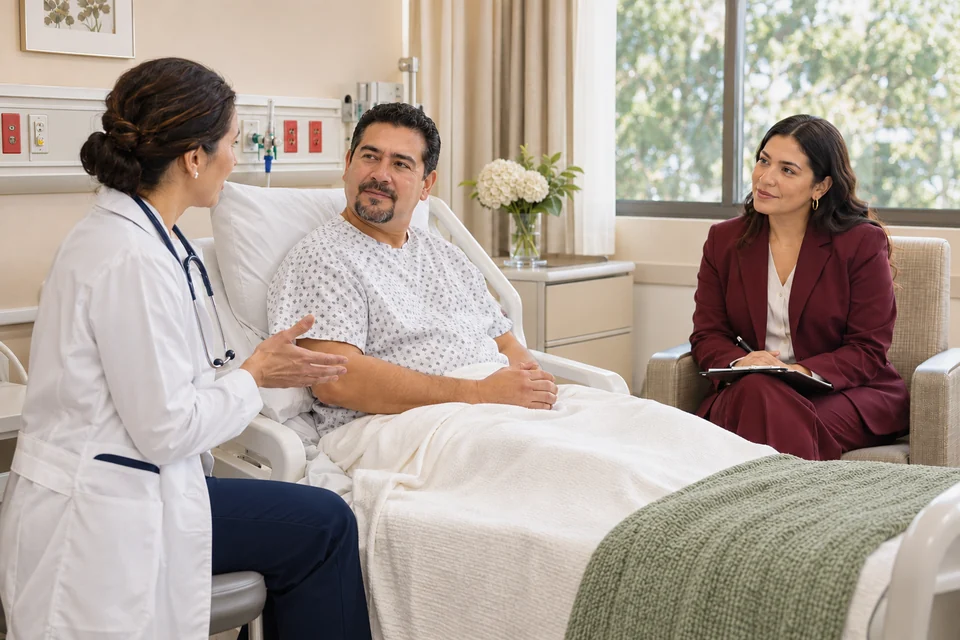
Medical interpreting
English–Spanish interpreting for appointments, treatment conversations and patient communication.
Explore service
Legal interpreting
Language support for law firms, client meetings, depositions and case-related appointments.
Explore service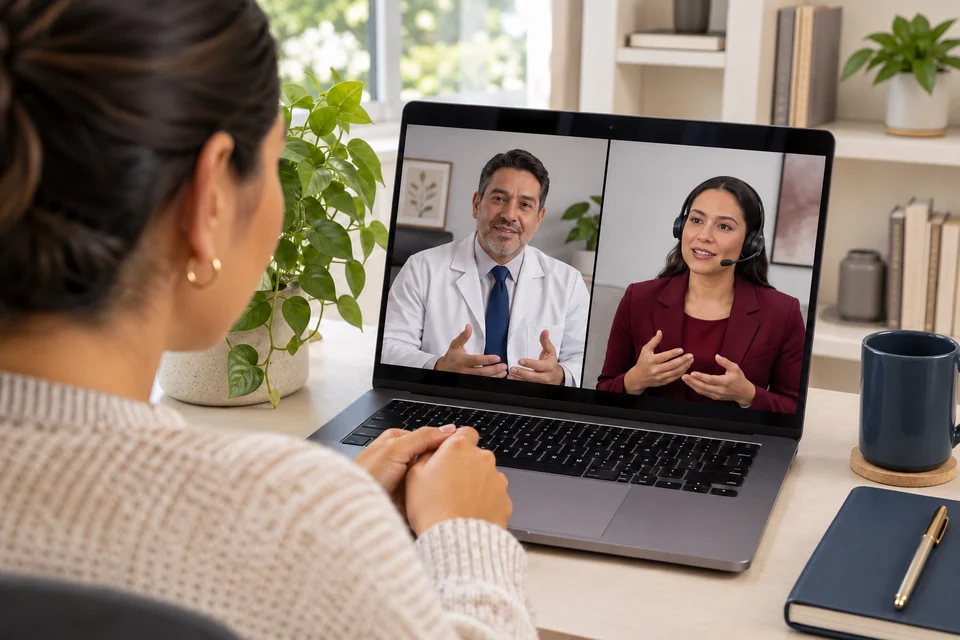
Telehealth & remote interpreting
Remote language support for telehealth visits and professional conversations, arranged with your team.
Explore service02 / WHO WE WORK WITH
Different settings.
One shared need:
understanding.
Language support for care teams, legal professionals and the communities they serve.
Explore industries03 / LOCAL PRESENCE, REMOTE CONNECTION
Close to your community.
Ready to connect.
Our in-person dispatch area includes 19 ZIP codes. For conversations beyond an on-site appointment, ask about telehealth and remote interpreting.
See all covered ZIP codes ↗19
ZIP codes. One dedicated team.
A SIMPLE WAY TO GET STARTED
From request to conversation.
Tell us what you need
Share the language pair, appointment setting, preferred date and location or remote format.
Coordinate with our team
We review the assignment, scheduling and requirements with you before confirming arrangements.
Connect with confidence
Receive the agreed appointment details and meet with an interpreter in person or remotely.
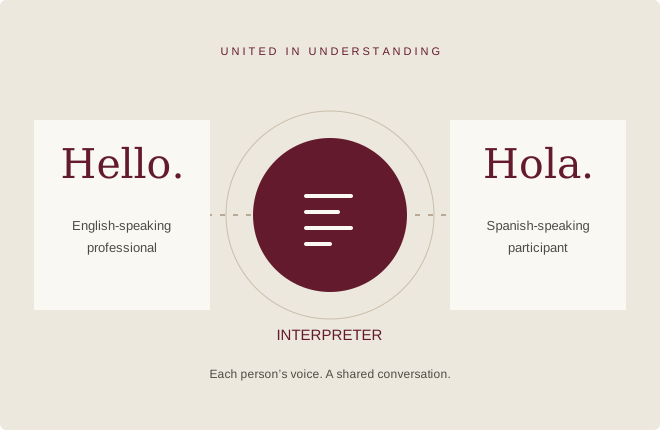
ONE CONVERSATION, TWO LANGUAGES
Bring every voice
into the conversation.
English–Spanish interpreting connects the people speaking. The professionals keep their roles; each participant keeps their voice.
A CLOSER LOOK
Language support that fits the conversation
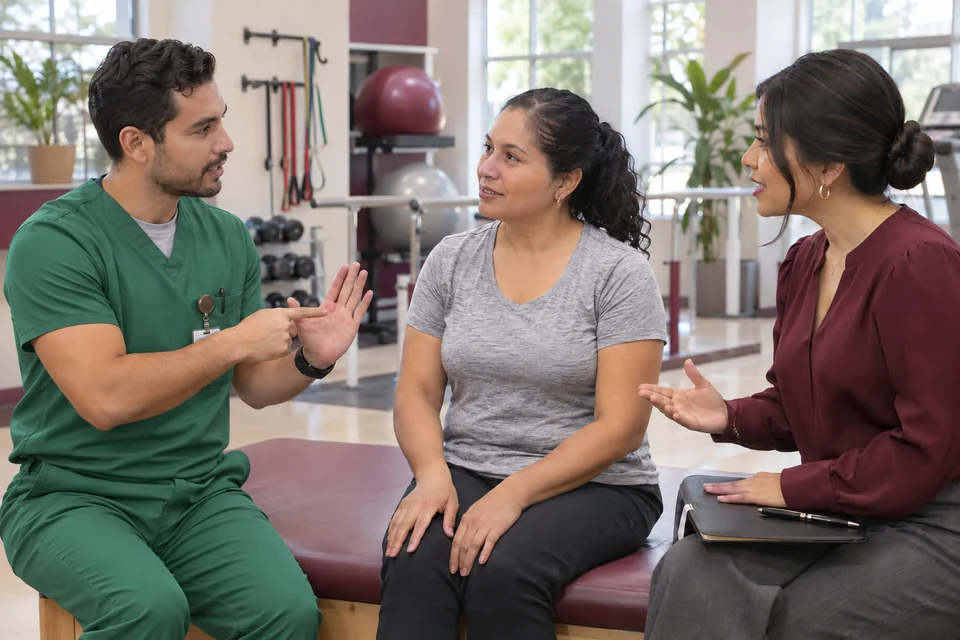
A medical appointment and a legal consultation ask different things of the people taking part. Patients may need to describe a concern or ask a clinician to explain an instruction. Clients may need to understand an attorney’s question and respond in their own words. United Language Professionals Corp provides English–Spanish interpreting with those everyday communication needs in mind. Our team works with the organization arranging the meeting to understand its setting, schedule and language requirements before confirming service.
Interpreting concerns spoken communication; translation concerns written material. That distinction helps define a request accurately. If you need a person to participate in an appointment, explore our medical interpreting service or legal language support. If your question concerns a document, tell us the document type and intended use first. Written translation scope and any certification requirements need their own review.
An interpreting team for healthcare and legal organizations

Our service audiences include primary care and urgent care clinics, physical therapy practices, orthopedic and pain-management clinics, hospitals, and imaging or MRI centers. We also work with requests from personal injury, immigration and workers’ compensation law firms, along with deposition and court reporting companies. These settings share a need for clear exchanges, but each brings its own appointment structure. The right preparation begins with identifying who will participate and what kind of conversation the interpreter will support.
Marco Dominguez is part of our interpreting team. His background includes English–Spanish clinical communication and Bridging the Gap medical interpreter training in Atlanta in 2024. Assignment requirements are reviewed individually; one person’s training does not establish every team member’s credentials or suitability for every proceeding. Our team and approach page explains the people, experience and communication approach behind the business.
Choose an on-site appointment or a remote connection
For physical interpreter dispatch, use the ZIP code of the appointment location. Our coverage page lists the 19 ZIP codes supplied for dispatch and provides a quick checker. Being inside that area means a location is within the listed coverage; it does not reserve a person or guarantee availability at a particular time. Tell us the date, expected length and type of visit so we can discuss the request.
A telehealth visit calls for a different set of arrangements. The requesting organization and our team need to coordinate the platform, participant access and session format. Our website does not host a virtual clinic or connect a visitor to an interpreter instantly. Read about telehealth and remote interpreting before making an inquiry, especially when your appointment location is outside the physical dispatch list.
Preparation makes the first inquiry more useful
A useful first message identifies the organization, the language pair, the appointment setting, the preferred date and the estimated duration. For an on-site visit, add the appointment ZIP code. For a remote meeting, describe the intended platform or ask what details the team needs. If the organization requires specific onboarding or credentials, identify that requirement early so it can be considered before confirmation.
Keep the initial request focused on logistics. Patient names, diagnoses, medical records and confidential case files are unnecessary for a general availability discussion. Our request page prepares an email in your own email application, where you can review and send it. An inquiry begins a conversation with our team; appointment details and any applicable agreements still need to be confirmed.
An appointment request should reflect the real conversation
A useful way to describe a request is to start with who is speaking and why they are meeting. For example, a clinic may be arranging a patient’s discussion with a therapist, while a firm may be arranging a client’s conversation with an attorney. Each involves a different professional setting, and the person organizing it can identify the format and scope without sending sensitive background information.
If several conversations are planned, separate them in the inquiry. List the location or remote format and expected timing of each appointment rather than assuming that one service request covers a whole sequence. A change from a consultation to a recorded proceeding, or from a virtual meeting to a facility visit, can affect what must be reviewed. Clear logistical descriptions help the team discuss the actual service instead of relying on a broad label such as translation.
Our role begins with understanding those practical needs. Once the assignment has been reviewed, the relevant participants can confirm how language support fits their appointment. The goal is a defined conversation with clear responsibilities and an agreed plan for participating.
QUESTIONS BEFORE YOU REQUEST
Useful answers.
Clear next steps.
Where should a new organization begin?
Start by choosing the appointment setting: a healthcare visit, legal conversation or remote professional meeting. Review the relevant service page, check dispatch coverage if someone will attend in person, and prepare the scheduling essentials. You can then contact our team to discuss the request without sending confidential records.
Does ULP offer both physical dispatch and telehealth interpreting?
Yes. The business describes physical interpreter dispatch within 19 listed ZIP codes and telehealth language support by arrangement. These are coordinated services, so the requested time, format and assignment still need review. Use the coverage page for on-site locations and the telehealth page for remote participation questions.
What happens after I prepare a request?
Preparing a request creates an email draft for you to check and send. It does not place an interpreter on a calendar automatically. Our team needs to discuss the appointment with you and confirm the actual arrangements. Keep the request about logistics so sensitive information is not included unnecessarily.
LET’S MAKE UNDERSTANDING POSSIBLE